



ricambi idraulici
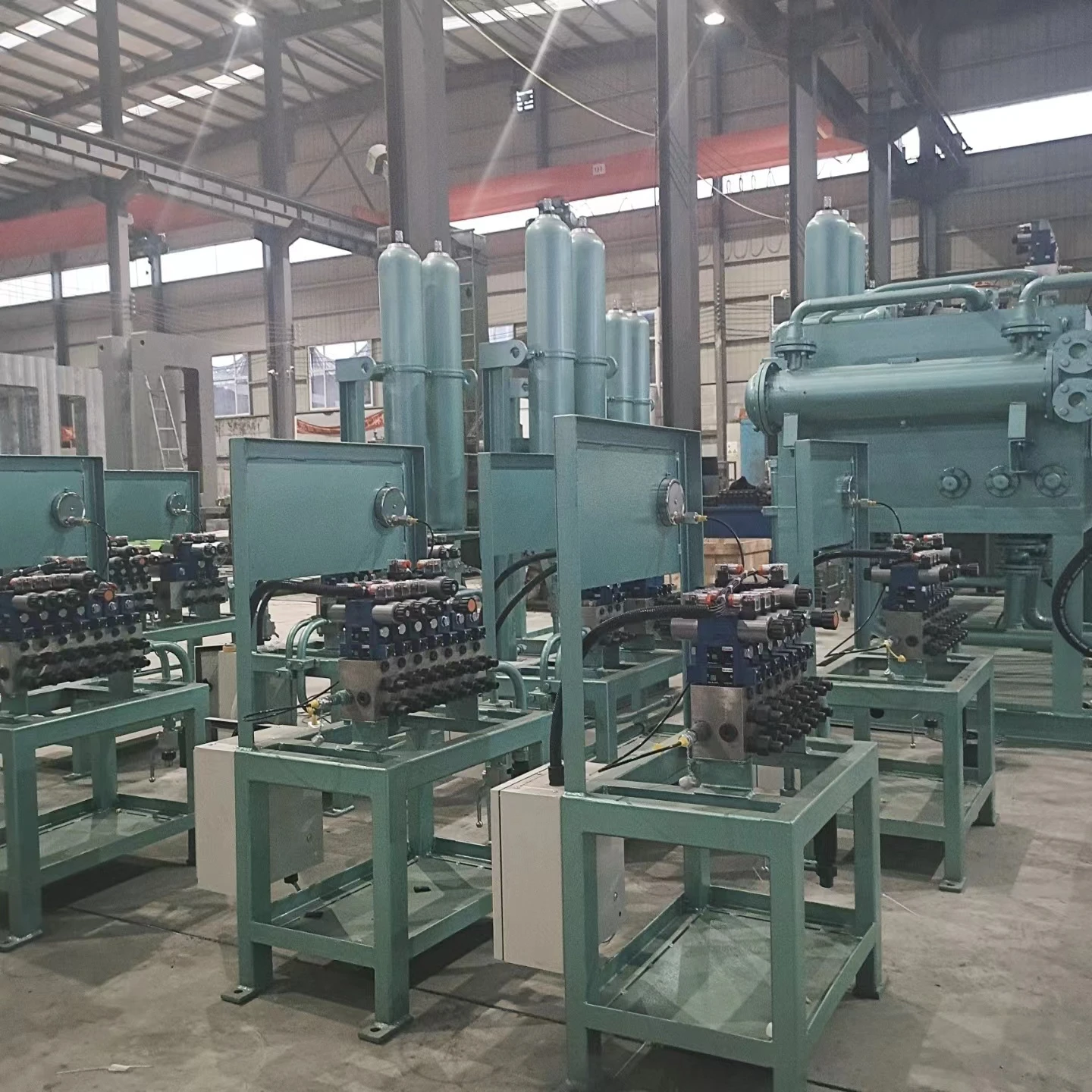
Field Notes: Getting a Reliable Water Cooling System for Water Tank Retrofits Right I’ve spent enough time around steel lines and pilot mills to know that the unsung hero is often the humble water cooling system for water tank . When it runs well, nobody notices. When it doesn’t, everything—from roll flatness to bath chemistry—goes sideways. That’s why I paid attention when YWLX (Beijing YWLX, Origin: No.1518, LAR Valley Int'l, Guang’anmen Avenue, Xicheng District, Beijing, 100055) began bundling revamp engineering and spare parts around tank-based cooling loops for process lines and university labs. It sounds niche, but it’s very 2025: tighten control, save power, extend life. What’s new in tank-loop cooling Trends we’re seeing: switch to closed-loop glycol with plate heat exchangers, variable-speed pumps, and smarter PID/PLC logic that talks to AGC/shape control. Actually, the software matters as much as the steel. Many customers say energy cuts of 10–18% are realistic after a proper retrofit, though real-world use may vary with climate and tank geometry. YWLX’s angle: Revamping service and Spare Parts Under the banner “Revamping service and Spare Parts,” YWLX upgrades legacy lines (think Continuous Galvanizing Lines with Skin Pass Mill) and supports testing mills used by GRINM and other institutes. For a water cooling system for water tank , they re-engineer: tank internals (SS316L baffles), heat exchangers (Brazed/plate, CuNi or titanium plates for corrosive media), pumps, valve blocks, sensors, and the control loop tied to line setpoints. Process flow, materials, and tests Typical flow: intake filtration → variable-speed pump → plate heat exchanger → distribution manifold → tank mixing/baffles → return. Materials: SS316L, HDPE (chem-resistant lids/liners), EPDM/FKM seals, CuNi or Ti plates where chloride is a risk. Methods: CFD-guided tank mixing, NPSH checks, and cavitation audit. Testing standards referenced on projects include ASME B31.3 (piping), API 650 (welded tanks), and pressure/leak tests to GB/T 9119. Service life: ≈10–15 years for major components; seals ≈3–5 years depending on chemistry. Typical technical specs (retrofit package) Parameter Typical value Notes Cooling capacity 150–800 kW Scalable; real-world use may vary Flow rate 40–220 m³/h ΔT ≈ 5–8°C Tank volume 10–60 m³ With mixing baffles Controls PLC + PID + VFD AGC/line interface via Modbus/Profinet Materials SS316L, CuNi/Ti plates Corrosion-resistant selection Compliance ISO 9001, CE (where required) Project-specific documentation Vendor comparison (indicative) Vendor Customization depth Certs Lead time On-site support YWLX (Revamping service and Spare Parts) High (tank, HX, PLC, hydraulics) ISO 9001, CE (project-based) ≈8–14 weeks Global commissioning General OEM Medium (catalog-centric) ISO/CE 10–20 weeks Regional Local fabricator Variable Varies 4–12 weeks On demand Applications and results Industries: metals rolling (hot/cold), CGL, pickling lines, nonferrous research, and, surprisingly, fermentation/aquaculture pilot tanks that need ±0.5°C stability. In one CGL revamp, we measured ΔT control tightened from ±3.2°C to ±1.4°C, with pump energy down ≈15% via VFDs. At GRINM-related pilot setups, stable alloy trials only happened after the water cooling system for water tank loop stopped “hunting” around setpoint. Customization, QA, and data YWLX tweaks manifolds, HX metallurgy, and PLC logic per fluid chemistry. Factory FAT includes hydrostatic test (1.5× design pressure), flow/ΔP verification, PID tuning, and I/O simulation. Field SAT adds thermal load tests and alarm validation. Test data from recent jobs: COP ≈ 4.1 at 32°C ambient; ΔT 7°C; specific energy ≈0.28–0.35 kWh/ton of product (metals line). What users say “We stopped chasing temperature drift,” a plant manager told me—“and quality complaints quietly disappeared.” Another customer noted spare parts availability (bearing chocks, hydraulic valve blocks) reduced unplanned downtime; small thing, big effect. Authoritative citations ASHRAE Handbook—HVAC Systems and Equipment, Cooling Towers & Heat Exchangers, latest ed. ASME B31.3 Process Piping; API 650 Welded Tanks for Oil Storage (applicable clauses for industrial tanks). ISO 9001:2015 Quality Management Systems; CE marking directives for machinery and pressure equipment. GB/T 9119 Steel Pipe Flanges; CTI guidelines for thermal performance verification.

We have successfully executed over 500
projects around the world,
many first-of-their-kind
research projects and products in China, including
We have successfully executed over 500
projects around the world,
many first-of-their-kind
research projects and products in China, including
-
2004
The 1st hydraulic AGC system for hot rolling of ribbon steel
-
2006
The 1st AFC system used for 1450mm skin pass mill
-
2009
The 1st 5-stand tandem line with 2-stand POR & Uncoiler for 650mm ribbon steel
-
2012
The 1st reversing mill for 1380mm strip
-
2016
The 1st soft-rolling system used in skin pass mill
-
2019
The 1st fully automated medium-width tandem cold rolling mill
-
2021
The 1st 5000KN Twin-stand double skin pass mill
-
2022
The 1st coupled pickling line & tandem cold mill with two modes - big roller & small roller
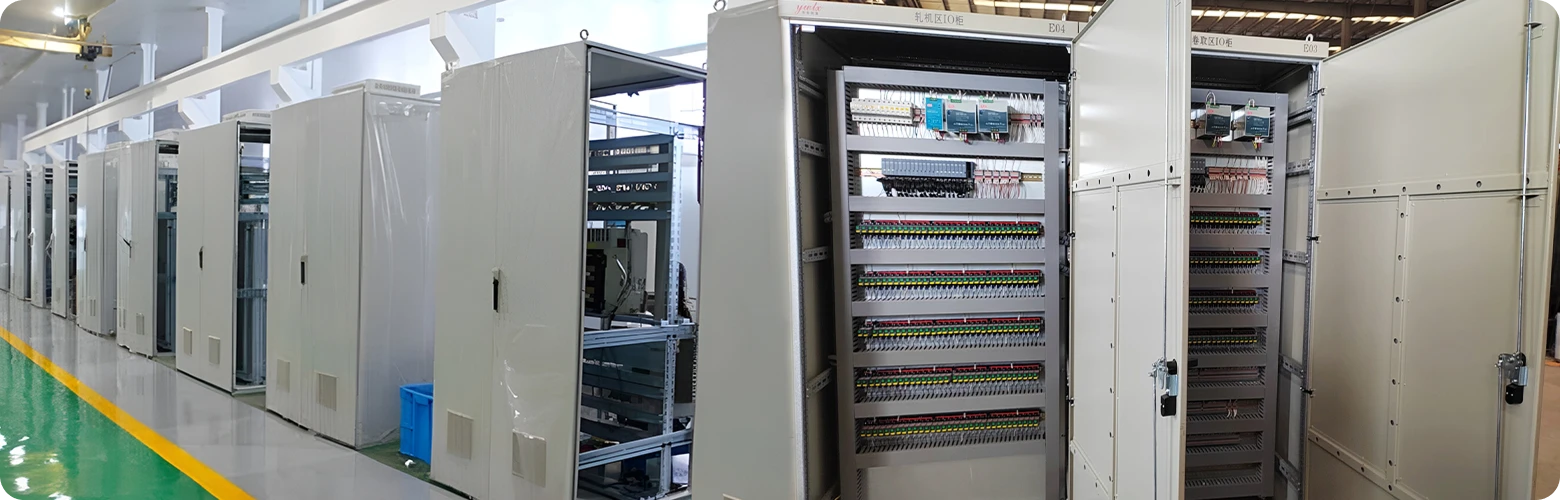
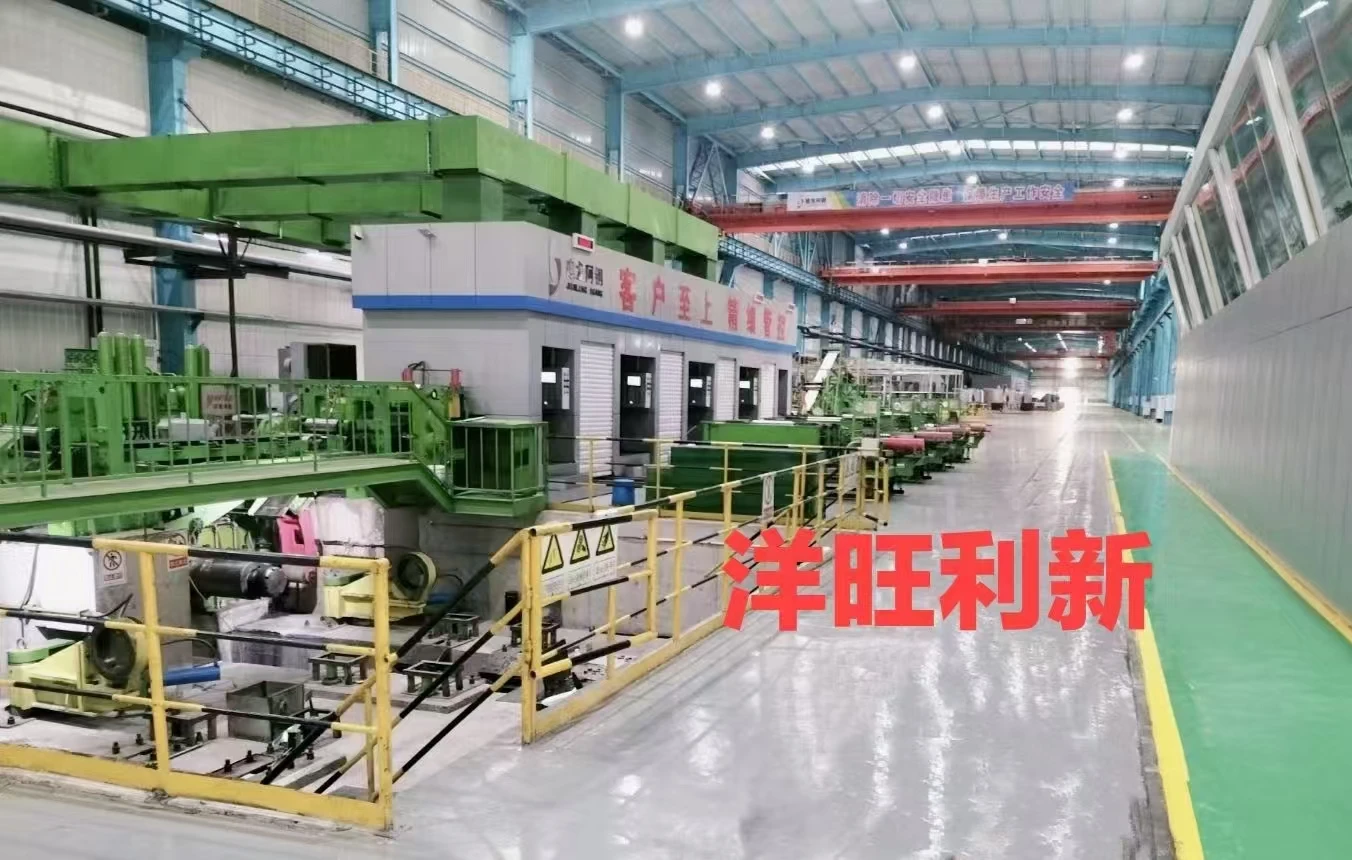
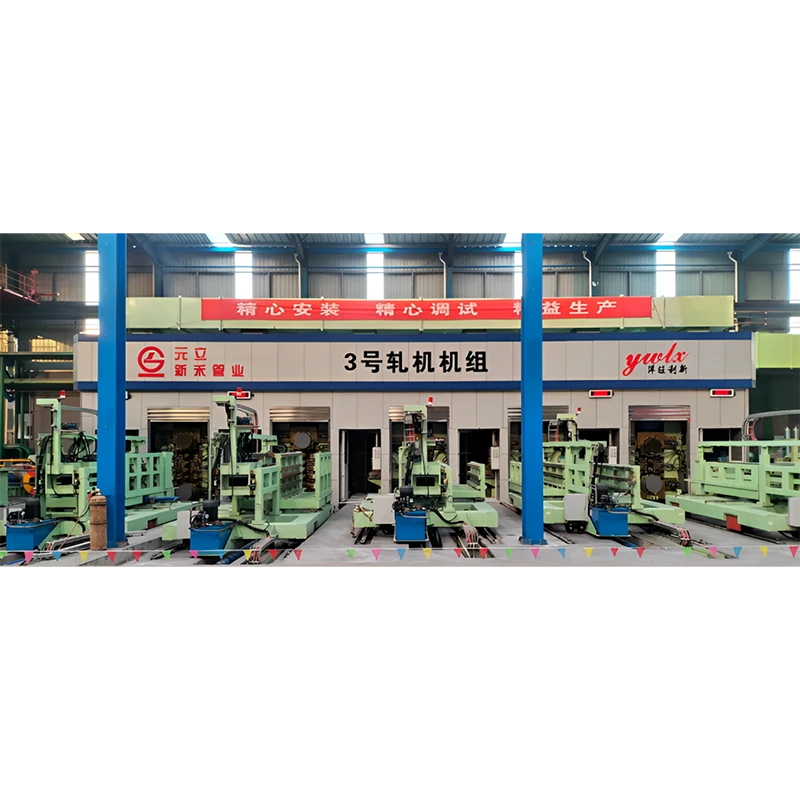

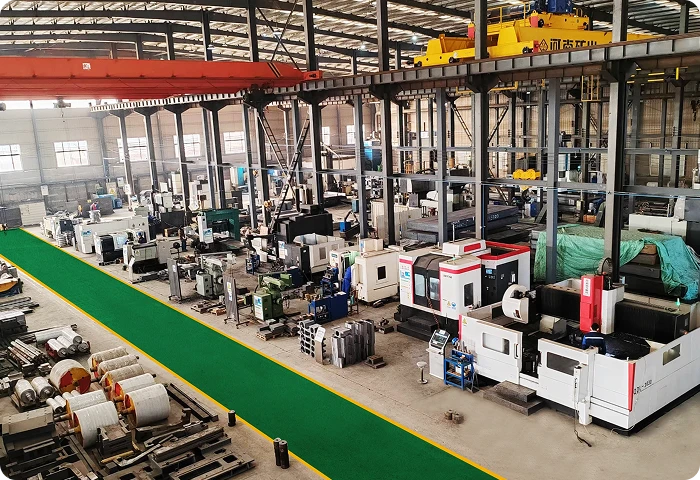
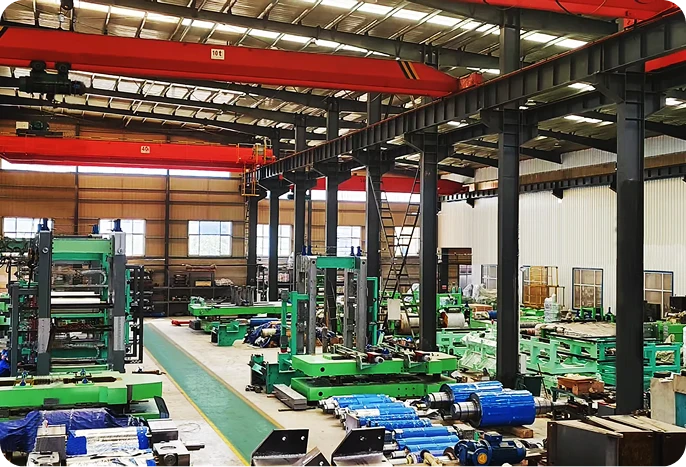
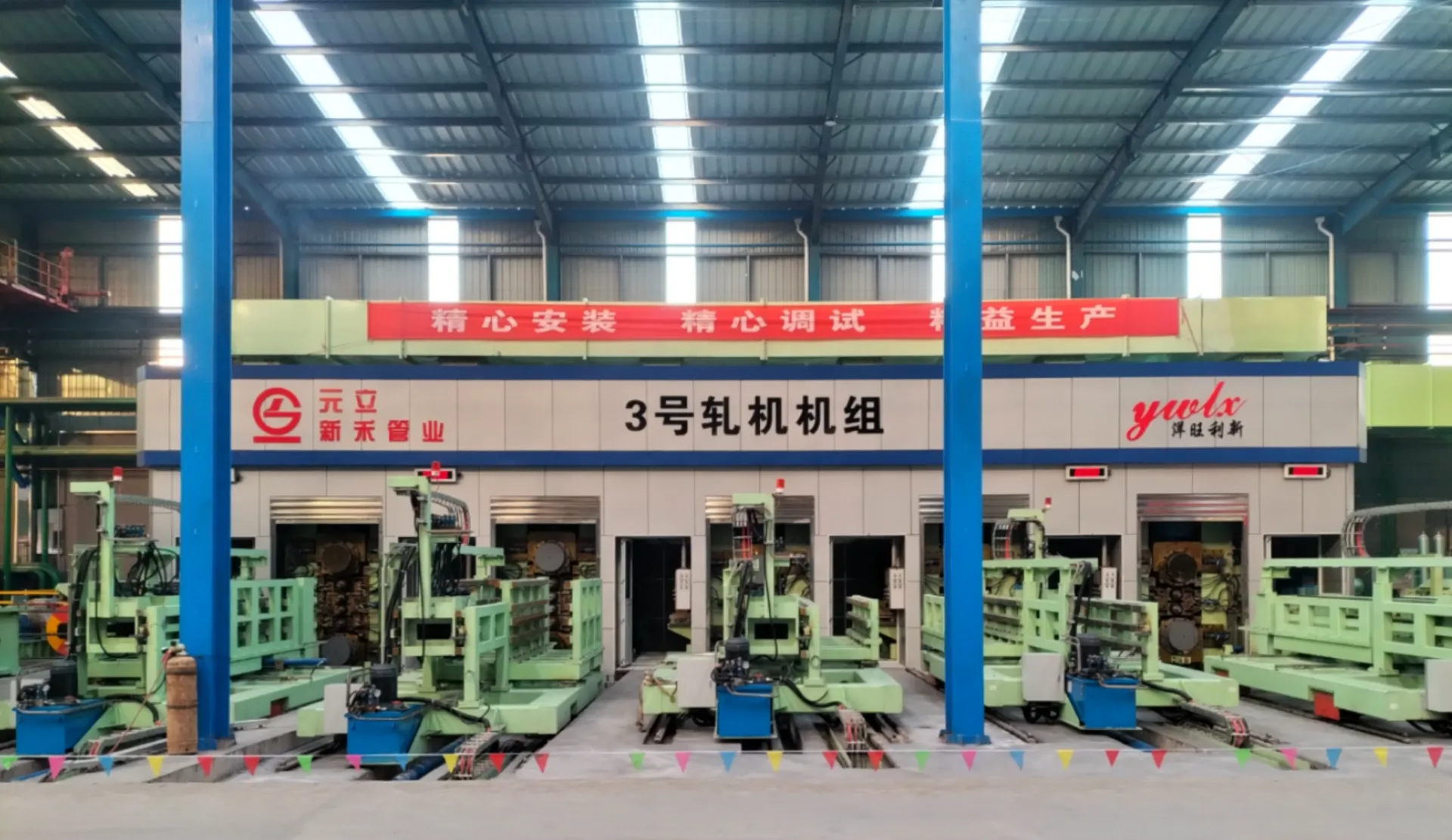
Yang Wang Li Xin operates a state-of-the-art facility over 66,000 square meters,and our manufacturing facility is fully equipped with high-tech machinery and high-capacity cranes. This enables us to handle large work pieces measuring 4.5m in width, 10m in length, and 1.5m in height, guaranteeing our capacity to produce 1800mm skin-pass mills and 1450mm rolling mills. The individual piece can weigh up to 100 tons.


Quality is fundamental to the enterprise survival. We have established a comprehensive and meticulous quality management system and have successfully obtained ISO14000 certification. Starting from the design source, it supervises the entire production cycle, including design, procurement, processing, assembly, in-factory testing, installation, and online commissioning. The workshop is equipped with measuring tools like vernier calipers, spectrometers, hardness testers, and ultrasonic flaw detectors. They are used to check materials and control tolerances to ensure the final equipment meets or exceeds requirements. All products have a unique code, This enables the easy identification and traceability of the equipment components and ensures full control of quality.


-
 Practical Uses Of The Temper Rolling ProcessThe temper rolling process is an essential stage in the steelmaking industry that ensures finished products meet high standards of quality. This process involves applying a small amount of cold reduction to steel sheets or strips after annealing. The aim is to improve mechanical properties, eliminate yield point elongation, and enhance flatness. Industries such as automotive, appliance manufacturi
 -
 Temper Rolling Mill | Precision Flatness & Surface QualityA reporter’s take: what a modern temper rolling mill really does on the shop floor If you’ve ever watched a coil line hum at 300+ m/min, you know the magic isn’t just hot rolling or pickling—it’s the skin-pass stand that quietly fixes shape, surface, and feel. To be honest, that’s where a lot of downstream headaches disappear. A good temper rolling mill (also called a skin-pass mill) eliminates yi
 -
 Reversible Rolling Mill: High Precision, Energy EfficientReversible Rolling Mill is a key solution in the manufacturing industry, specifically within Metallurgical equipment manufacturing and Manufacturing of steel rolling equipment. This article explores how Beijing Yang Wang Li Xin Sci&Tech Co.,Ltd. supports professionals with durable, high-performance products, and explains why this product is an ideal choice for businesses in these sectors. Table of


